



Description and Varieties of Acalypha

Special attention goes to the inflorescences (flower spikes), which resemble fluffy red brushes with many tiny florets. They cascade beautifully, looking like the hanging tails of fluffy animals.

Acalypha does not require overly strict growing conditions and grows quickly. The following species are the most popular and widely available for growing as indoor plants in the US:

Acalypha wilkesiana (Copperleaf). This is an artificial hybrid characterized by bright coloring. The leaf color can be light green or speckled red. The flower spikes look like purple cobs. This species features popular variations such as mosaica (massive leaves decorated with darker speckles) and godseffiana (oval leaves framed by a creamy or golden edge).

Acalypha hispida (Chenille Plant) – this is the most famous variety. This is the one commonly called the “cat’s tail” or “foxtail.” Its spectacular crimson flowers reach up to 20 inches (50 cm) in length and contrast beautifully with the broad green leaves.

Acalypha pendula / hispaniolae (Trailing Chenille Plant). Known for its thin and winding trailing shoots, this variety is perfect for hanging baskets. The leaves have serrated edges, and the scarlet fuzzy flower spikes are relatively small but bloom profusely.
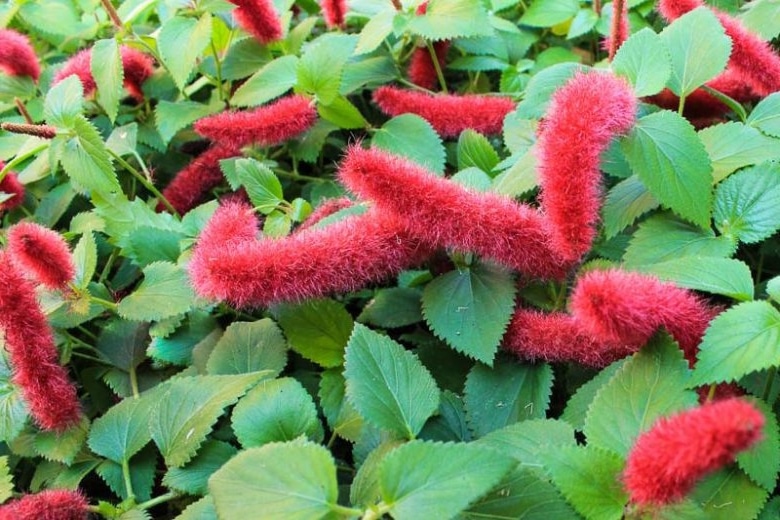
Acalypha reptans (Dwarf Chenille Plant). This is a compact, low-growing plant that usually stays under 12 inches (30 cm) tall. It produces an abundance of short, vibrant red, fuzzy catkins dangling from arching branches, making it a great windowsill plant.
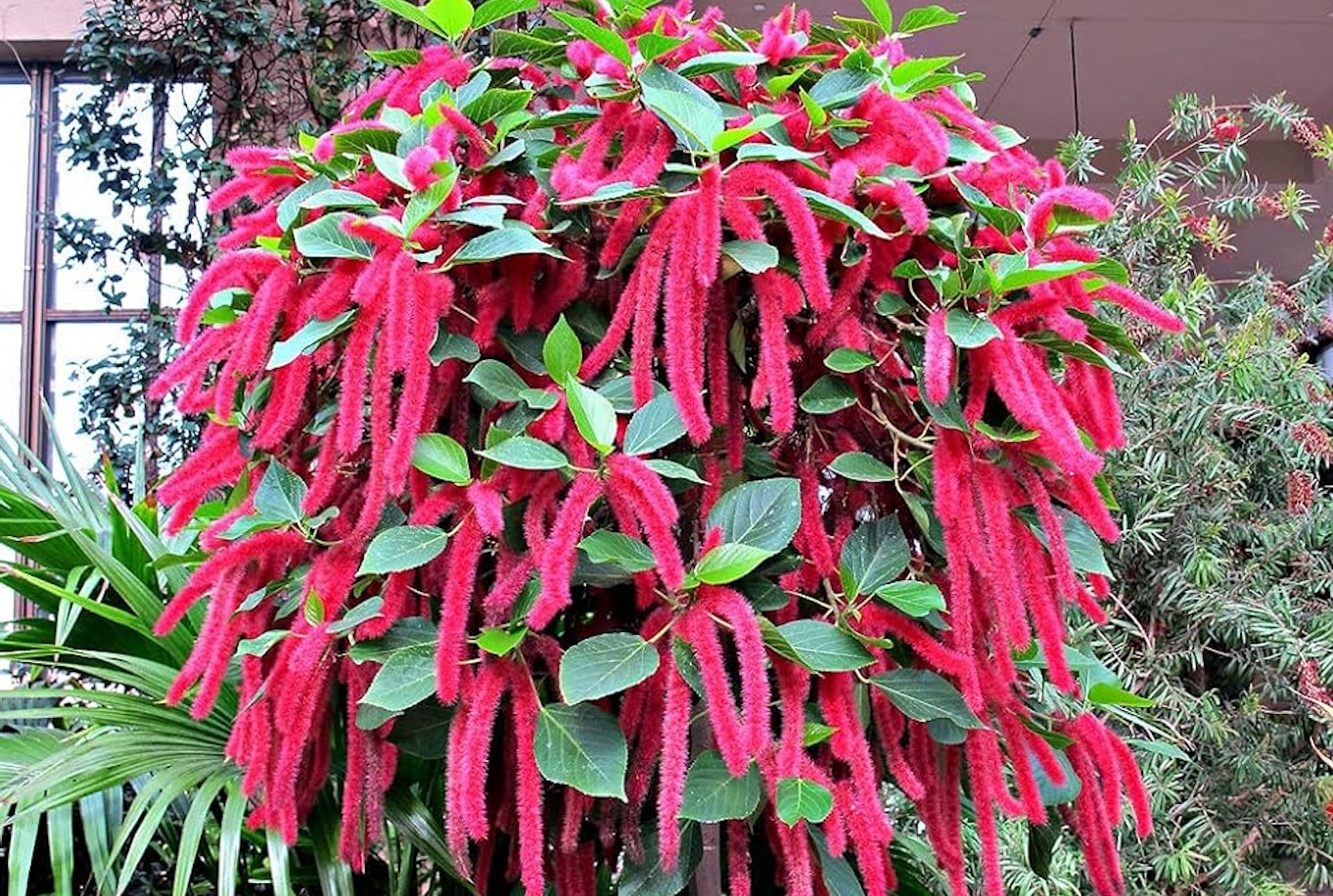
Acalypha chamaedrifolia (Bastard Copperleaf). A low-growing, spreading ground cover type that can be adapted for indoor containers. It forms a dense, small bush with bright green foliage and small, reddish-green spikes.

Variegated Acalypha. Its large leaves are a rich green color with striking white, cream, or yellow spots, and its flower spikes, unlike other red varieties, are usually a subtle greenish color.
Acalypha is a toxic plant (its sap can cause skin irritation, and leaves are toxic if ingested), so it should not be kept in a home with small children or pets.
Acalypha Indoor Care Guide

Temperature
Acalypha is a heat-loving plant, so from spring to early fall, you need to maintain a consistent room temperature between 72°F and 77°F (22–25°C). In winter, this should be slightly lowered to around 54–59°F (12–15°C). Temperatures that are too high can cause the stems to stretch, causing the plant to lose its attractive appearance. If it gets too cold, the Acalypha’s growth will slow down, and it will become more susceptible to diseases.


Humidity
During the active growing season, you must mist around the plant daily using a spray bottle with room-temperature, filtered, or distilled water. It’s crucial to humidify the air around the plant, but never spray the leaves directly. Using a pebble tray or a room humidifier is highly recommended in dry, air-conditioned US homes.

Do not mist the Acalypha while it is blooming, as water ruins the fuzzy flowers.
Lighting
Acalypha needs a lot of sunlight, but it must be bright, indirect light. Do not let direct, harsh sun rays hit the leaves. The best place for the pot is near an East- or West-facing window. The plant will also do well near a South-facing window, provided you use a sheer curtain to filter the direct sunlight. You cannot place the plant in dark, shaded corners, as the leaves will lose their vibrant colors and the shoots will stretch (become “leggy”) reaching for the sun.


Watering
Water your Acalypha moderately. You should never let the root ball dry out completely. Keep the soil evenly moist but not soggy. In winter, reduce the frequency and amount of watering slightly.

Potting and Soil
You should choose a relatively small pot for the Acalypha. Its root system likes to feel a bit snug and slightly root-bound, but a container that is too small can harm it. The roots should fit comfortably in the pot, leaving just enough room for future development.

Fertilizing
You should feed your Acalypha from March to October. Standard liquid mineral fertilizers (like those for flowering houseplants or tropicals) sold in US garden centers work perfectly. Apply the fertilizer once every two to three weeks. The plant also responds very well to organic fertilizers, such as worm castings (vermicompost).


Repotting
Up to the age of three, Acalypha grows actively and needs to be repotted annually into a container slightly larger than the previous one. Mature plants are repotted much less frequently (once every 3–4 years). Older, larger bushes should simply be “potted up” (moved to a new pot without disturbing the root ball too much) or have the top 1–2 inches (2.5–5 cm) of soil replaced with a fresh potting mix (top-dressing).


Dormancy Period
Technically, an Acalypha growing indoors does not require a strict dormancy period. It is not very pronounced. However, with the general drop in temperature and light during winter, the plant slightly slows its growth and may stop blooming. During this time, reduce the frequency of watering and completely stop fertilizing the plant.
Propagation
Acalypha can be successfully propagated from seeds. They should be sown in a loose, light seed-starting mix made of potting soil and coarse sand (or perlite). Cover the seed trays with a glass pane or a clear plastic dome, keep the soil consistently moist, and maintain the air temperature around 68–72°F (20–22°C). Every day, lift the glass or plastic to ventilate and lightly mist the soil surface with a spray bottle. Once the seedlings reach 0.8–1.2 inches (2–3 cm) in height, they can be pricked out and repotted into individual small pots.

You can also propagate Acalypha using stem cuttings. For rooting, cut strong, young stem tips, dip the ends in a rooting hormone powder or gel (to stimulate the root system), and then plant them in a light, well-draining soil mix. New leaves will appear in just about a month and a half. To ensure the new bush grows full and bushy, pinch off the top leaves (growing tips).


Photos Sent by Our Readers


Questions and Answers
Translated from ancient Greek, it means "nettle," referring to the nettle-like appearance of its leaves.
Yes. To keep the bush looking neat and encourage new growth, you should regularly prune (deadhead) the fading or dying flower spikes. You can also pinch back the stems in spring to promote a bushier shape.
Under the right indoor conditions (plenty of light and warmth), it can bloom almost year-round.
This usually happens due to a lack of moisture. If the soil is too dry, water the root ball thoroughly immediately. However, if the soil is wet, yellowing leaves can also be a sign of root rot from overwatering.
This is often due to a lack of micronutrients in the soil. To fix the situation, start a regular fertilizing routine during the growing season. Lack of bright, indirect light is another common cause of slow growth.
Yes, it can occasionally attract pests like thrips, aphids, mealybugs, spider mites, or scale insects. To get rid of them, treat the plant with insecticidal soap or neem oil (or chemical insecticides for severe infestations).
No, Acalypha is toxic to pets. Ingesting the leaves or flowers can cause severe gastrointestinal upset (vomiting, diarrhea), and the sap can irritate their skin and mouth. Keep it in hanging baskets or rooms where pets cannot reach it.
This happens if the flowers get wet during misting, or if the air in the room is too dry. Remember to increase room humidity using a pebble tray or humidifier, but never spray water directly onto the fuzzy blooms.
You can, but it should be placed in a shaded or semi-shaded spot (like a covered patio) protected from harsh direct sun and strong winds. Bring it back indoors well before nighttime temperatures drop below 60°F (15°C).


