



What Microelements Do Succulents Need?
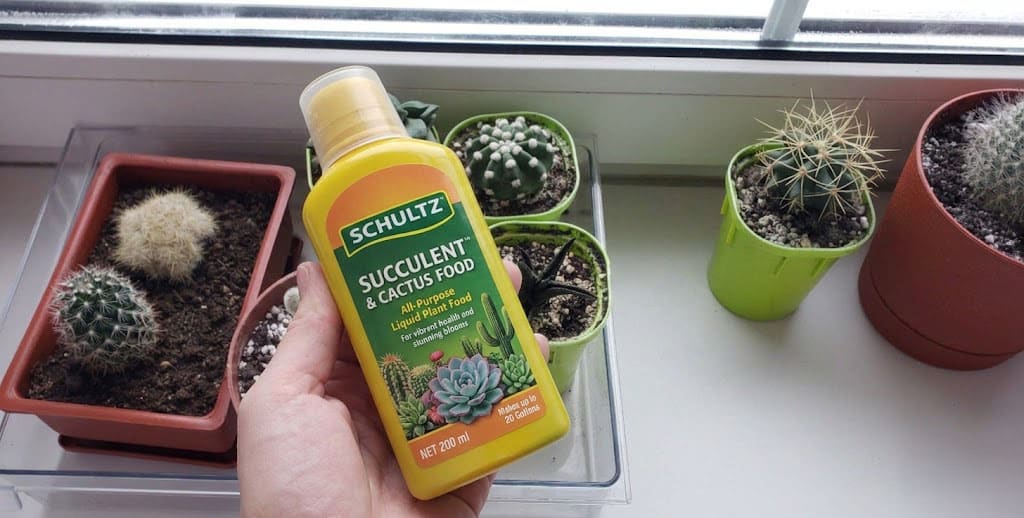
The dosage also differs due to the specific characteristics of their natural environment. In nature, all succulents grow in nutrient-poor soils, so excess feeding is more harmful than beneficial to them. Overall, succulents need the same nutrients as all plants, but in completely different amounts. In the US, it is standard to rely on the NPK (Nitrogen-Phosphorus-Potassium) ratio on labels, aiming for balanced or low-nitrogen formulas.
Nitrogen (N). Slow-growing plants need very little of this microelement; otherwise, active growth impairs cellular turgor, making the outer tissues watery and flabby. You cannot completely eliminate nitrogen – this leads to nitrogen starvation. The optimal feeding schedule is as follows: do not fertilize during the colder months; during the rest of the year, feed no more than once a month using a low-nitrogen formula at about 1/3 of the dose recommended for other plants.
Phosphorus (P). Stimulates root system growth and ensures abundant blooming. Phosphorus improves the bud formation process and regulates the duration of blooming. If there is a lack of it, plants may not bloom, and their growth will stop. When using a complete mineral fertilizer for succulents, make sure it has more phosphorus than nitrogen or potassium, such as a 2-7-7 NPK mix.
Potassium (K). Essential during any vegetative stage. Its main function is to increase the plant’s drought resistance. Potassium also helps the outer skin to toughen and withstand temperature fluctuations. However, an excess can have detrimental effects, manifesting as stunted growth and root system problems.
Calcium (Ca). The main building block that promotes the full development of spines, hairs, and bristles. A lack of calcium leads to soil acidification. The symptoms of its deficiency are similar to the negative effects of improper care – excessively high air temperatures or insufficient lighting. You can solve this problem by applying dolomite lime. But, like nitrogen, calcium must be applied in limited and strictly measured doses.
Types of Succulent Fertilizers


Liquid Fertilizers. Available in spray bottles or concentrated mixes that must be diluted with water before use. For example, you may need to mix 1 teaspoon (approx. 5 ml) per 1 gallon (3.8 liters) of water. Concentrated mixes require a bit more effort, but they are generally more cost-effective.

Granular Fertilizers. Affordable and simple to use. You just need to mix them into the topsoil every 4-6 weeks.

Slow-Release Fertilizers. Produced in the form of granules, pellets, spikes, or capsules, and have a special coating that allows them to gradually release nutrients into the soil. They can last up to 9 months. Slow-release formulas are convenient but offer the user less control and carry a risk of over-fertilization.

Worm Castings (Vermicompost). An organic fertilizer made from the waste products of earthworms processing cattle compost or any biodegradable organic waste. In US commercial production, Red Wigglers (Eisenia fetida) or Red worms are standardly used instead of local Russian breeds. They are typically applied as an excellent organic component of the potting substrate.

Timing and Rules for Feeding Succulents

The general rules for feeding are as follows:
- Do not apply fertilizer during poor weather conditions. On a cloudy day or during extreme heat, a succulent’s metabolism slows down, so any feeding will yield minimal results rather than the expected boost. During this time, the plants consume very few micronutrients.
- After repotting into a new pot, a succulent does not need feeding for at least 21 days (3 weeks).
- Never fertilize unhealthy or pest-infested plants, as this can only cause more harm.
- Succulent fertilizer should be diluted with room-temperature filtered or distilled water. Avoid using straight tap water if it contains high levels of hard minerals (like calcium carbonate), heavy metals, or chlorine!
- Apply all products strictly according to the package instructions. Using too little will be ineffective, while using too much will provoke root burn and diseases.
- Apply fertilizer only after a thorough watering to avoid burning the root system.
- As the growing season comes to an end in the fall, gradually reduce the frequency of feedings.

Succulents strictly prefer root feeding. They do not like foliar sprays. Apply the fertilizer directly to the soil, avoiding getting it on the leaves or the crown of the plant.
How to Choose a Succulent Fertilizer

- Purpose. Products can be all-purpose or specialized. It is highly recommended to choose formulas specifically designed for succulents and cacti.
- Composition (NPK Ratio). In the US, fertilizer ratios are always listed as N-P-K (Nitrogen-Phosphorus-Potassium). Make sure the nitrogen (N) number is significantly lower than the others. During the active growing season, experts advise feeding succulents with products that contain an N-P-K ratio of 5-16-38 (5% Nitrogen, 16% Phosphorus, 38% Potassium).
- Preferably buy liquid or water-soluble powder fertilizers, as it is much easier to calculate the exact proportions.
- Expiration date (Shelf life).
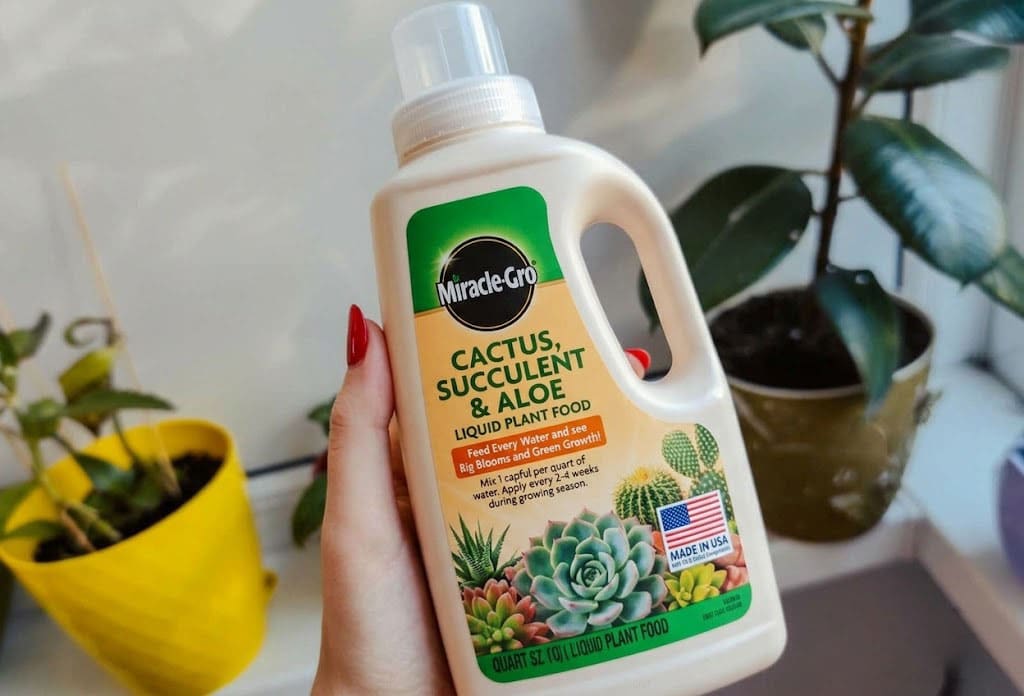
The composition of succulent fertilizers depends on the season and the plant’s development stage:
- In spring, nitrogen-containing fertilizers are needed to enhance vegetative growth. Slow-growing species are fed once every few months, while fast-growing ones are fed monthly. Fertilizers also stimulate spring blooming. To achieve this, increase the concentration of potassium (K) and phosphorus (P). For lush blooming, an N-P-K ratio of approximately 0.5-1.5-4 is required.
- In summer, apply complete bloom-boosting fertilizers to ensure long and vibrant flowering.
- In winter and fall, do not fertilize the plants. This is not required even for winter-blooming cacti, as they have already accumulated all the necessary elements during the vegetative period.
Signs of Nutrient Deficiency

This can signal an insufficient amount of not only nitrogen but also other trace elements — from boron and copper to halogens and manganese. In this case, complete balanced fertilizers will help. But sometimes there is a specific imbalance, and the plant begins to lack a particular micronutrient. You can guess what to feed your indoor succulent garden by looking for these obvious signs:
- dropping buds or dying off at the growing point — iron (Fe) deficiency.
- paling of the normal color of the above-ground part (chlorosis) — magnesium (Mg) deficiency.
- active formation of offsets (pups), often instead of buds — zinc (Zn) deficiency.
- weak root system — indicates a lack of calcium (Ca) in the soil;
- appearance of reddish spots and dying off of viable shoots — a sign that the plant needs sulfur (S).


Best Ready-Made Fertilizers for Succulents

Recipes for Homemade Fertilizers
If you cannot buy ready-made mixes for succulents or are unsure of their quality, you can prepare a custom mineral supplement yourself using one of the following recipes. (Note: For such precise measurements, it is highly recommended to use a digital kitchen or jeweler’s scale).
- 0.018 oz (0.5 g) calcium sulfate (gypsum);
- 0.018 oz (0.5 g) magnesium sulfate (Epsom salt);
- 0.035 oz (1 g) potassium nitrate (saltpeter);
- 0.009 oz (0.25 g) iron sulfate;
- 0.009 oz (0.25 g) superphosphate.

Mix all the ingredients and dissolve them in 0.66 gallons (2.5 liters) of clean water.
A second option for a fertilizer mix. Combine:
- 0.7 oz (20 g) potassium nitrate;
- 0.28 oz (8 g) superphosphate;
- 0.018 oz (0.5 g) magnesium;
- 0.42 oz (12 g) potassium phosphate;
- 0.18 oz (5 g) potassium sulfate.


Photos Sent by Our Readers


Frequently Asked Questions (FAQ)
No. Fresh natural organic matter (cow, pig, or chicken manure) is generally contraindicated for these plants because it contains too much nitrogen. This provokes rapid, unhealthy growth ("fattening"), causing the plant to lose its shape and suppressing the processes of budding and blooming. If you still want to use organic feeding (and only for flowering plants), it is better to use commercially available liquid organic fertilizers (like compost tea or liquid kelp) in small quantities, found in specialized garden stores.
Hydrogen peroxide is not a fertilizer, but it is a great tool for succulent care. A mild solution (mix 1 tablespoon of 3% hydrogen peroxide per 1 cup of water) can be used to aerate the soil and treat root rot. It also helps kill fungus gnat larvae in the soil. However, it does not provide macronutrients, so you still need a regular succulent fertilizer for healthy growth.
It is not recommended. While coffee grounds are popular for other plants, for succulents, they can retain too much moisture and promote fungal growth. Additionally, caffeine can actually stunt the growth of some plants. It's safer to stick to well-draining mineral amendments.
Yes, but with a caveat. Eggshells are a great source of calcium, which succulents love. However, simply crushing them isn't enough as they take years to break down. For immediate benefit, it's better to grind them into a fine powder or steep them in water to create a calcium-rich "tea" before watering.
Products like SuperThrive or liquid kelp extracts are excellent supplements, acting as vitamins and stress adaptogens rather than primary food. They are great for helping succulents recover from repotting shock, heat stress, or disease. While they encourage strong root development, they have a very low N-P-K ratio, so they should be used alongside (not instead of) a balanced succulent fertilizer.
It is highly recommended to avoid it. While "banana water" is a popular internet trend for houseplants, it is dangerous for succulents. Soaking banana peels extracts very little usable potassium. More importantly, it leaches natural sugars into the water, which can quickly attract pests like fungus gnats and fruit flies, and promote mold or root rot in the dry soil environment that succulents prefer.


