


However, fertilizer only works in conjunction with proper overall care: adequate lighting, correct watering, a well-aerated potting mix, good drainage, and suitable temperatures. If a plant is suffering from overwatering, severe drought, cold drafts, pests, or root rot, adding fertilizer will not fix the underlying issue and may actually increase the plant’s stress levels.

Why Do Indoor Plants Need Fertilizer?

In their natural environment, plant roots explore vast volumes of soil, while decaying organic matter and soil microbes constantly recycle nutrients back into a usable form. In container gardening, this mechanism is severely restricted: the root system is confined to a small volume of potting mix. As a result, the natural reserves of nitrogen, phosphorus, potassium, calcium, magnesium, and trace elements are depleted much faster.


Fertilizer is necessary to maintain normal plant metabolism, encourage new stem growth, support bud formation, develop a strong root system, and prevent hidden nutrient deficiencies. Plants that deplete their soil fastest include fast-growing foliage plants, heavy bloomers, large specimens, and plants that haven’t been repotted in a long time.

The main goal of fertilizing is not to “force” a flower to grow faster, but to provide the plant with accessible, balanced nutrition during periods when the potting mix’s own reserves are no longer sufficient.
Signs Your Plant Needs Fertilizer
Nutrient deficiencies in houseplants usually manifest gradually, and more often than not, it affects the overall growth pattern rather than showing just one isolated symptom. It is crucial to evaluate the plant as a whole, because similar symptoms can be caused by low light, watering mistakes, root damage, soil salt buildup, or pest infestations.
- Growth slows down significantly; new leaves and shoots are noticeably smaller.
- The leaf blades become lighter in color, developing general chlorosis (yellowing) or losing their vibrant hue.
- Internodes (the space between leaves on a stem) become elongated, making stems look thin, leggy, and weak.
- Bud formation is poor, and blooming periods become noticeably shorter or irregular.
- Older, lower leaves yellow and drop off faster than usual, while new leaves may emerge deformed.
- The plant looks generally stunted or depressed, despite receiving relatively consistent care.

For flowering houseplants, typical signs include weak budding and buds dropping before they open. For foliage plants, it’s a loss of leaf density and brightness. If there is a nitrogen deficiency, older leaves turn pale and yellow; a phosphorus deficiency can cause a purplish tint on the leaves and weak blooming; potassium deficiency leads to brown edges and scorched leaf tips; and an iron deficiency causes interveinal chlorosis (the leaf blade turns yellow while the veins remain starkly green). Because these symptoms can overlap with other care issues, using a well-balanced, complete fertilizer is the safest approach when in doubt.
How to Choose the Right Houseplant Fertilizer
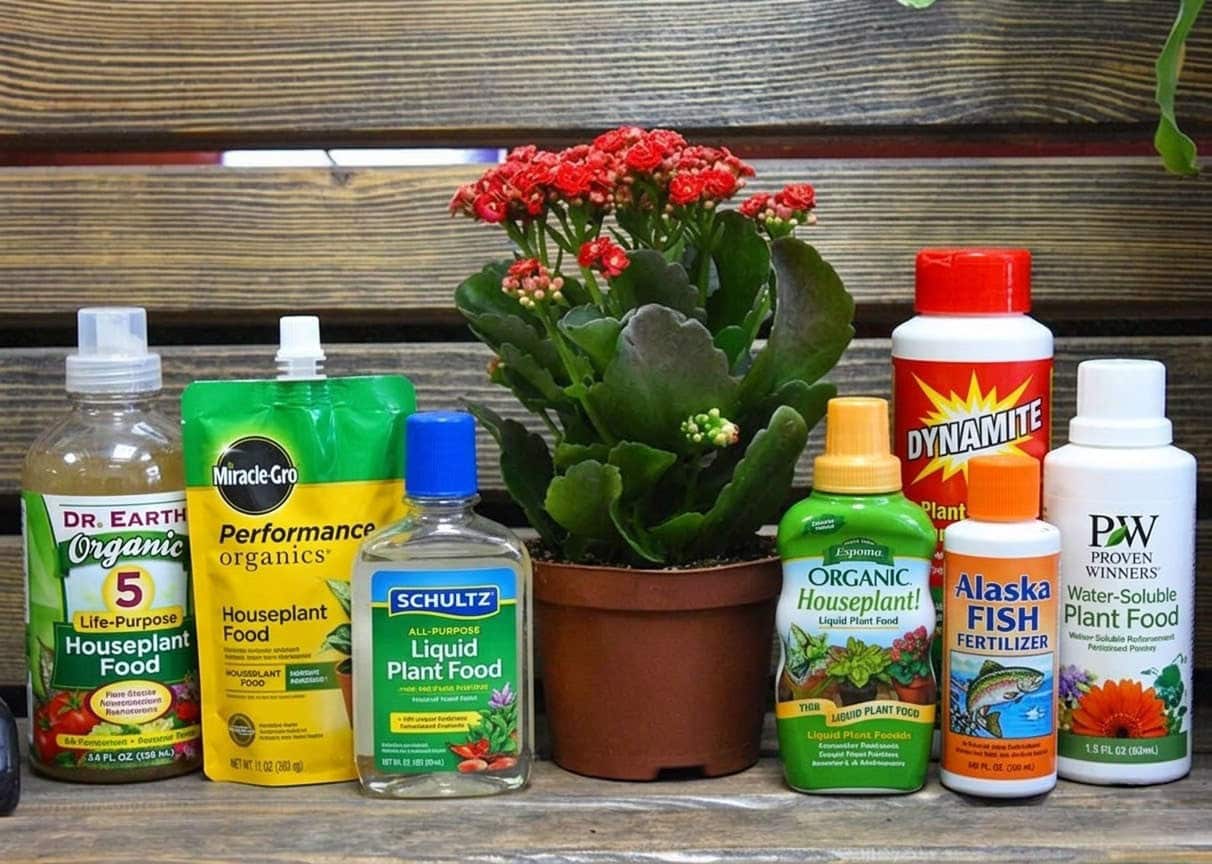
For most houseplants, commercially prepared fertilizers labeled specifically as “Houseplant Food” or targeted for a specific group—like blooming plants, foliage plants, orchids, or cacti and succulents—are optimal. These formulas are specifically designed for container growing and typically include not just NPK, but also vital micronutrients.

Understanding the NPK Ratio and Micronutrients
NPK stands for Nitrogen (N), Phosphorus (P), and Potassium (K)—the three primary macronutrients. Nitrogen is essential for leafy, green vegetative growth; Phosphorus supports strong root development and energy transfer; Potassium improves water regulation, tissue strength, stress tolerance, and full blooming. Additionally, plants require secondary nutrients and trace elements like magnesium, calcium, iron, manganese, boron, and zinc.
The N-P-K ratio is always printed on the label: for leafy foliage plants, you might see ratios like 9-3-6, 16-4-14, or 20-10-10; for blooming plants, you might see a bloom-booster ratio like 10-20-10 or 5-10-10; while balanced, all-purpose fertilizers usually read 10-10-10 or 20-20-20.
Choosing by Plant Category
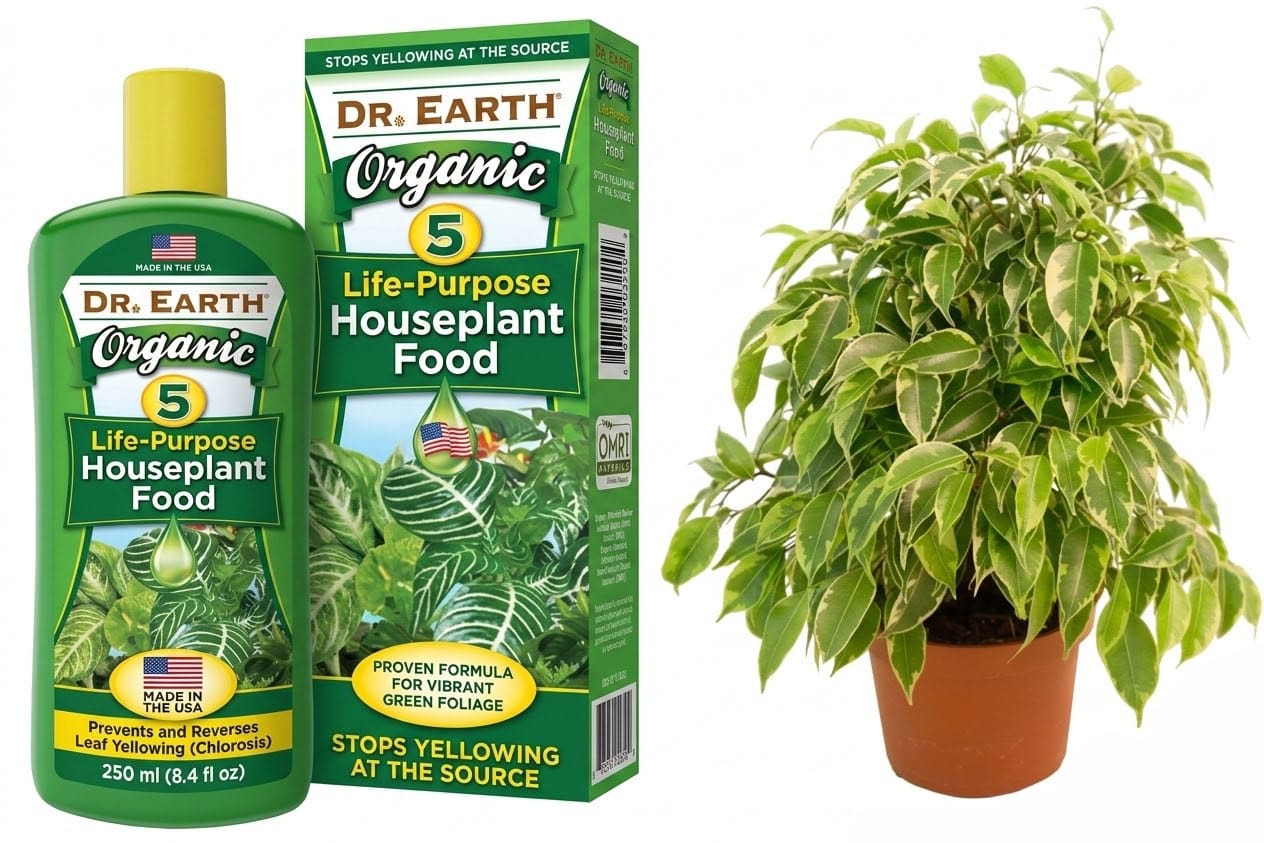
- Foliage Plants: Respond best to formulas with a slightly higher percentage of nitrogen (like a 9-3-6 ratio) during their active growing season.
- Flowering Houseplants: Require a complete, balanced diet, but during the bud-setting phase, they benefit from formulas that aren’t overly high in nitrogen, favoring stronger phosphorus and potassium support instead.
- Orchids: Should only be fed with specialized, highly diluted orchid fertilizers; many species are fed year-round, but less frequently and at a weaker dose during winter.
- Cacti and Succulents: Require specialized low-nitrogen succulent fertilizers and a feeding schedule tailored to their unique physiology.
- Acid-Loving Plants (like Azaleas, Camellias, and Gardenias): Need fertilizers specifically formulated for acid-loving crops; they should ideally be watered with rainwater, distilled water, or soft filtered water.
The lower the light and temperature, the more cautious you must be with fertilizing: in low-light conditions, the plant processes nutrients much slower, drastically increasing the risk of salt buildup in the soil.

Types of Houseplant Fertilizers
Based on their origin and physical form, indoor plant foods can be categorized into synthetic (mineral), organic-mineral blends, commercial organic products, and slow-release options. In practice, liquid synthetic or gentle liquid organic blends with clear instructions are the most convenient for indoor gardening.
- Synthetic (mineral) fertilizers
- Organic and organic-mineral blends
- Complete all-purpose and specialized formulas
- Slow-release (time-release) fertilizers
The “best” houseplant fertilizer is not the strongest one, but the one that best matches your specific plant group, the current season, and your watering habits, all without causing salt buildup in the soil.
Synthetic (Mineral) Fertilizers
Synthetic fertilizers deliver nutrients in an immediately accessible form, allowing you to control the dosage with high precision. For indoor gardening, this is the most predictable option, especially when you need steady growth, bloom support, or to rapidly correct a distinct nutrient deficiency.

Liquid synthetic fertilizers are generally the most convenient for houseplants: they are easy to measure, simple to dilute in water, and applied directly to the root zone during regular watering. It is critical to follow the label instructions strictly. For weakened plants, young seedlings, or highly sensitive species, it is always best to start with a half-strength dilution.

Dry water-soluble powders, fertilizer spikes, tablets, and granular options are also used, but they can be harder to control indoors. If a plant is kept in a hot room, grown in a tight pot, or watered inconsistently, these solid forms carry a much higher risk of causing localized salt buildup and subsequent root burn.
Organic and Organic-Mineral Blends
Organic products for potted plants are only acceptable in a controlled, commercially prepared form. Indoors, it is much safer to use ready-made organic or organic-mineral liquid blends rather than raw organic matter, homemade compost, or compost teas of unknown concentration.

Using raw organic matter in a flower pot can provoke mold, fermentation, unpleasant odors, attract fungus gnats, and degrade soil aeration. For this reason, products with a clear ingredient list, exact application rates, and a safe salt index are vastly preferred for indoor plants.


Even gentle organic-mineral blends cannot be applied indiscriminately. You must base your feeding schedule on the plant’s growth phase, your watering frequency, the soil composition, and the plant’s reaction. Feeding should be regular, but moderate.
Complete and Specialized Formulas
Complete fertilizers combine all the essential macronutrients and are perfect for the baseline care of most indoor plants. Specialized formulas come in handy when a specific plant has distinct requirements regarding salt tolerance, soil acidity, or seasonal growth patterns.


Most all-purpose blends are built around the NPK complex along with a suite of trace elements. For home care, buying a complete mix is far more practical than trying to manually combine individual nutrient salts yourself.
- N (Nitrogen) — essential for the growth of leaves, stems, and overall vegetative mass.
- P (Phosphorus) — vital for strong roots, energy transfer, budding, and blooming.
- K (Potassium) — helps maintain water balance, tissue strength, and overall stress resistance.
All-purpose formulas are convenient if you have a diverse collection of common houseplants. Specialized ones are better suited for orchids, African violets, aroids, citrus trees, succulents, and other demanding crops. If your plant shows signs of an iron, magnesium, or calcium deficiency, targeted supplements may be necessary, but only after carefully evaluating the symptoms and the plant’s environment.

Most Common Types of Fertilizers in the US
On the shelves of any local garden center, you will find both universal formulas and highly specialized products. Some of the most widely used and trusted brands include Miracle-Gro, Jack’s Classic, Espoma Organic, and Osmocote. Ultimately, for indoor gardening, following the manufacturer’s instructions and dilution rates matters much more than the brand name.
- High-Phosphorus “Bloom Boosters” (e.g., Jack’s Classic Blossom Booster) are used during the budding and flowering phases to improve bud quality and prolong blooming.
- Complete NPK Liquid Formulas (like Miracle-Gro Indoor Plant Food) are ideal for regular root feeding during the active growing season.
- Slow-Release Granules (like Osmocote Smart-Release) are mixed into the soil and provide a steady, low dose of nutrients for up to 6 months.
- Kelp and Seaweed Extracts act as organic biostimulants. While they contain trace minerals, they do not replace a primary NPK fertilizer.
- High-Nitrogen Fertilizers should only be given during the active growing season and only when the plant genuinely needs to push out new green foliage.
For home gardening, a systemic feeding schedule using small, diluted doses is always safer than infrequent but highly concentrated applications.
How to Properly Fertilize Indoor Plants

Most houseplants are fed only during their active growing season—typically from early spring (March) through early autumn (September). After September, feeding should generally be stopped, as late new growth will not have time to harden off before the low-light winter months. During winter, fertilizing is either drastically reduced or stopped entirely if the plant is dormant and not producing new growth.
Basic Rules for Application
- Never fertilize dry soil. Always apply fertilizer to a slightly moist substrate or immediately after a normal watering to prevent root burn. If using tap water, let it sit out for 24 hours so the chlorine can evaporate.
- Do not feed immediately after repotting. Fresh commercial potting soil usually contains its own supply of slow-release fertilizer, and damaged roots need time to heal and adapt before they can handle extra salts.
- Never fertilize sick or stressed plants. Do not feed plants that are suffering from hypothermia, severe drought, pests, or those that were recently brought home from the store. Wait until their condition stabilizes.
- Strictly follow the dosage on the label. Never increase the concentration hoping for a “faster effect.”
- Alternate feeding with plain waterings. This helps flush out excess salts. A very popular alternative is the “weakly, weekly” method: applying a very weak solution (¼ of the recommended dose) with every watering during the growing season.


Root vs. Foliar Feeding
The primary and most effective method for houseplants is root feeding—applying a liquid fertilizer solution directly to the soil. Foliar feeding (spraying fertilizer directly onto the leaves) is used cautiously and only as a spot treatment: use a highly diluted solution, apply only to healthy leaves, and do it in the evening or on a cloudy day (so the solution can be absorbed before the sun dries it out). Never foliar feed plants with fuzzy or hairy leaves, and remember that foliar sprays do not replace a proper root-feeding regimen.

If a plant has been recently repotted, is diseased, or is sitting in a low-light corner, it is always best to stabilize its core care conditions first before reintroducing fertilizers.
Feeding Schedules by Plant Group
There is no universal feeding frequency that applies to all houseplants. The exact same fertilizer solution works differently for a fast-growing Monstera, a compact African Violet, a blooming Pelargonium, and a dormant Cactus. You must tailor your feeding to the biology of the species and its actual growth rate.
- Foliage Plants: Feed during the active phase of leaf and shoot growth using complete formulas with added micronutrients.
- Flowering Species: Provide basic nutrition during the vegetative phase. However, during budding and blooming, switch to “bloom booster” formulas focused on flower quality to avoid overfeeding with nitrogen.
- Orchids: Fertilize exclusively with specialized, highly diluted orchid foods. Many species are fed year-round, but at a significantly reduced dose during the winter.
- Cacti and Succulents: Feed rarely—only during their active growing season—using specialized formulas with a very low salt index.
- Large Potted Trees (Ficus, Citrus, Palms): Often require more regular root feedings because their massive root systems deplete the container’s soil much faster.
- Acid-Loving Plants (Azaleas, Camellias): Must be fed with specific acidifying fertilizers to maintain proper soil pH and prevent iron chlorosis.
What NOT to Use as Houseplant Fertilizer

Homemade DIY mixtures rarely allow you to accurately calculate nutrient concentrations or salt loads. As a result, you have no idea what the plant is actually receiving. Inside a pot, these kitchen scraps drastically increase the risk of fermentation, mold, soil souring, fungus gnat infestations, and poor soil aeration.

- Crushed Eggshells do not provide a fast, accessible source of calcium for houseplants. Without an active compost pile to break them down, they sit in the pot and do virtually nothing to solve nutritional deficiencies.

- Sugar Water does not replace mineral nutrition. If applied regularly, it will violently disrupt the microbiological balance of the soil and attract pests.

- Banana Peels (whether buried in the soil or steeped as “banana water”) do not provide controlled nutrition. Instead, they often ferment, rot, and attract fruit flies and fungus gnats.

- Spent Coffee Grounds are not a universal fertilizer. In a pot, they quickly compact the top layer of soil, blocking airflow and water absorption, and are unsuitable for many plants.

- Used Tea Leaves do not provide a complete set of nutrients and frequently provoke severe mold growth and soil acidification when dumped on the soil surface.

- Citrus Peels and Homemade Teas have highly unpredictable chemical compositions and are entirely unsuited for a regular feeding regimen in a closed container.

- Wood Ash drastically alters the pH of the soil (making it highly alkaline) and is completely inappropriate for many houseplants. It should never be used without a deep understanding of soil chemistry.

- Onion Skins (steeped in water) can be viewed as a fun household experiment, but they do not serve as an agronomically viable replacement for real fertilizers.
The scientifically sound and safest approach for indoor gardening is to use commercially prepared liquid, water-soluble, or slow-release fertilizers with a known NPK ratio tailored to the specific plant group. This makes it infinitely easier to control the dosage, feeding intervals, and the plant’s reaction.
Signs of Fertilizer Burn and How to Fix It
Overfertilizing your houseplants is often far more dangerous than underfeeding them. When excess fertilizer salts accumulate in the soil, they reverse the osmotic pressure, making it impossible for the roots to absorb water. The plant will begin to suffer and dehydrate, even if you are watering it regularly
- The tips and margins (edges) of the leaves become dry, crispy, and brown.
- A crusty, whitish or yellowish salt buildup appears on the soil surface or the rim of terracotta pots.
- New leaves emerge stunted, deformed, or yellowing.
- The plant suddenly loses turgor (wilts) and drops leaves for no obvious reason.
- The plant’s overall health noticeably deteriorates shortly after a feeding.
If you suspect fertilizer burn, stop all feeding immediately. In mild cases, you can save the plant by “leaching” or flushing the soil: place the pot in a sink or shower and slowly run a large amount of room-temperature water through the soil to wash the excess salts out of the drainage holes. In severe cases where the root system has already turned black or mushy from salt damage, the only way to save the plant is to remove it, gently rinse the roots, and repot it entirely into fresh, well-aerated soil.
Photos Submitted by Our Readers


Frequently Asked Questions (FAQ)
Below are short answers to the most common questions about what to feed houseplants, how to avoid overfeeding, and when fertilizers are truly necessary.
Both are highly effective, but they work differently. Synthetic (mineral) fertilizers usually work faster and allow for precise dosage control, while organic blends act more gently and slowly. For most indoor plants, commercially prepared liquid formulas with clear instructions are the safest and most convenient choice.
The most common signs of a nutrient deficiency include drastically slowed growth, pale or yellowing leaves, smaller-than-usual new foliage, and poor blooming. However, these exact same symptoms can be caused by low light, overwatering, or root rot, so you must evaluate your overall care routine first before adding fertilizer.
Generally, you should only fertilize during the active growing season (from early spring to early autumn). The frequency depends on the specific brand's dilution rate, but most houseplants do well with a feeding every 2 to 4 weeks. During the winter, fertilizing should be reduced or paused entirely.
Most houseplants do not need fertilizer in the winter because the short daylight hours cause their growth to slow down or stop completely. The exception is plants that actively grow or bloom during the winter months. Regardless, if you do feed in winter, use a much weaker dilution and apply it far less frequently.
Never fertilize immediately after repotting. You should wait at least 3 to 6 weeks. Fresh commercial potting soil almost always contains its own supply of slow-release nutrients, and the plant's roots need time to heal from the stress of being moved before they can safely absorb extra salts.
It is best not to rush. The plant needs time to acclimate to the light and humidity of your home, and nursery soil is usually heavily pre-fertilized. Spend the first month observing its health, establishing a proper watering schedule, and finding the right lighting instead.
All-purpose formulas are highly convenient for basic care and work great for a diverse collection of standard houseplants. However, for orchids, succulents, cacti, and heavy-blooming species, it is highly recommended to use specialized formulas tailored to their specific salt tolerances and nutrient needs.
They represent the ratio of Nitrogen, Phosphorus, and Potassium. Nitrogen (N) promotes lush green leaves and stem growth; Phosphorus (P) is vital for strong roots and flower production; and Potassium (K) supports overall cellular health and stress resistance. These numbers tell you exactly what stage of growth the fertilizer is best suited for.
Foliage plant fertilizers typically have a higher percentage of Nitrogen to support continuous green leafy growth. In contrast, blooming plant formulas ("bloom boosters") usually feature higher levels of Phosphorus and Potassium to encourage robust bud formation and prolonged flowering.
No, this is highly discouraged. Pouring a concentrated fertilizer solution onto dry potting mix can instantly burn the root hairs. You should always slightly moisten the soil first or apply the fertilizer immediately after your regular watering.
No. If a plant is suffering from overwatering, pest infestations, cold drafts, or root damage, adding fertilizer will not cure it and will likely cause severe chemical stress. You must first fix the underlying care issue; only resume feeding once the plant shows signs of active, healthy recovery.
Excess fertilizer salts draw water out of the roots. Symptoms include dry, crispy brown leaf tips, a white crusty salt buildup on the soil surface or pot rim, stunted or deformed new growth, and sudden wilting even when the soil is wet.
Stop fertilizing immediately. In mild cases, you can "leach" the soil by running a heavy stream of room-temperature water through the pot for several minutes to wash out the excess salts. In severe cases where the roots are burned, the plant must be completely repotted into fresh, clean soil.
Technically yes, but practically it is very risky indoors. It makes it impossible to track exactly how many nutrients your plant is receiving, greatly increasing the risk of an overdose. It is much safer to stick solely to a balanced commercial product with a clear dosage.
They should be avoided indoors. The main problem is that their nutrient breakdown is incredibly slow without an active compost pile. Inside a pot, these kitchen scraps frequently cause mold, foul odors, soil souring, and attract fungus gnats. They do not replace a scientifically formulated fertilizer.
Yes! Freshwater aquarium water is an excellent, gentle source of nitrogen (from fish waste) and beneficial microbes. However, its exact nutritional value varies, so it shouldn't entirely replace a complete fertilizer. Never use water from a saltwater tank, as the sodium will kill your houseplants.
A lack of flowers is rarely just a food issue. Blooming is heavily dictated by lighting, temperature drops, root-bound conditions, and proper winter dormancy. If these environmental needs aren't met, no amount of "bloom booster" fertilizer will force the plant to flower.
No, a one-size-fits-all approach does not work. Feeding frequency depends entirely on the plant's species, the season, its lighting conditions, the pot size, and how fast it is actively growing. Always adjust the feeding schedule based on the individual needs of the plant.
While yeast can stimulate soil microflora, its exact nutritional composition is totally unpredictable in a pot. Using yeast indoors drastically increases the risk of mold and disrupts the soil's balance. It is far more reliable to use standard commercial fertilizers.
No. Iodine is not considered a primary macronutrient in agronomy, and applying medical iodine drops to your soil is a common internet myth. At high concentrations, iodine is highly phytotoxic and can easily damage the root system.
Vitamins do not replace the NPK macronutrients and trace minerals a plant needs to survive. The effectiveness of pouring B-vitamins into potted soil is not scientifically proven for regular nutrition. You are much better off using a complete, scientifically formulated plant food.


